Balders condemn the police for blocking the discussion of our abducted sisters! Nile Media journalist Meaza Mohammed hosted a discussion program tomorrow. This program was a discussion about our sisters who were abducted nine months ago. Many, including our party, were invited to this program. However, according to journalist Meaza, the program in Wabishebele tomorrow was blocked by the police. Balderas strongly opposes the police’s refusal to discuss the issue of our missing sisters. Justice for our abducted sisters! May we all be more vocal for these sisters!
Balderas poletical party condemn the police for blocking the discussion of our abducted sisters which was intended to be tomorrow . Nile Media journalist Meaza Mohammed hosted a discussion program tomorrow. This program was a discussion about our sisters who were abducted nine months ago. Many, including our party, were invited to this program. However, according to journalist Meaza, the program in Wabishebele tomorrow was blocked by the police. Balderas strongly opposes the police’s refusal to discuss the issue of our missing sisters. Justice for our abducted sisters! May we all be more vocal for these sisters!
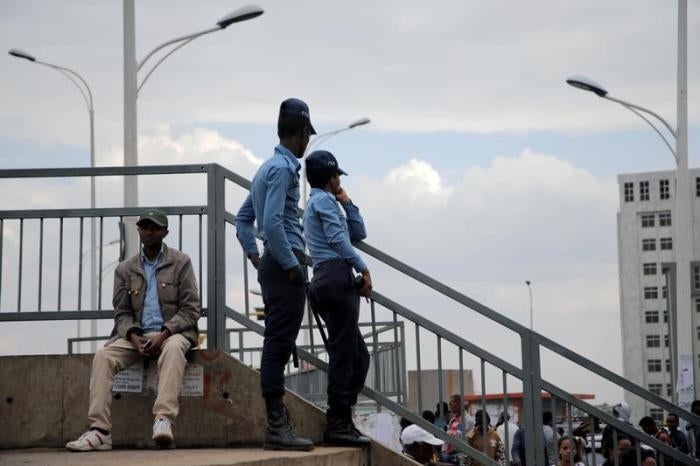
Police in Addis Ababa have disbanded a statement issued by the Ethiopian Social Justice Party regarding the land grabbing and unfair distribution of housing in Addis Ababa. – The party’s public relations head, Natnael Feleke, said in a letter to the Ministry of Peace a few days ago that the meeting was scheduled to take place on August 28, 2012. However, the Kirkos Sub-City Police Department denied the request.
Police in Addis Ababa have disbanded a statement issued by the Ethiopian Social Justice Party (EMA) regarding the land grabbing and unfair distribution of housing in Addis Ababa.
The party’s public relations head, Natnaiel Feleke, said in a letter to the Ministry of Peace a few days ago that the meeting was scheduled to take place on August 28, 2012. However, the Kirkos Sub-City Police Department denied the request.
Statement from the National Movement of Amhara(NAMA):
Our organization called the Amhara National Movement (NAMA)believed in an recent “genocide” in various parts of the Oromia region and called on government officials who were involved in the massacre, who did not fulfill their responsibility to protect the people, to be held accountable for their shortcomings and to rehabilitate the injured. From the day the attack took place, NAMA has been actively involved in many aspects of life. “Abin ” traveled to the scene of the attack in a timely manner, collected and compiled detailed evidence and passed it on to Amhara associations and institutions working specifically on the case. In the near future, it will provide full informations to the world, especially to relevant human rights organizations and international diplomatic missions. In connection with this, more than fifteen (15) Amharas were tragically killed and many others were displaced in the racist attacks that took place on August 12, 2012 in the area known as Nesh in Jarnega Woreda, Horogudru Zone, Oromia Region. We learned that there was still a security threat in the area. The Oromia Regional State and the Federal Government have a responsibility to ensure that the rule of law is upheld. NAMA called on the government to put an end to this planned genocide . On the other hand, when we look at some of the individuals arrested in connection with the violence in the Oromia region, we can see that there is a tendency to use crime as a pretext to undermine political views or to maintain the political balance of the perpetrators. NAMA urged the government to address the issue immediately and take appropriate action. In particular, Asrat TV journalists and staff members, Belay Manaye, Mulugeta Anberber, Yenatan Mulugeta and Misganawu Kefelegn, believe that they were arrested only because they are a voice for the people of Amhara. On the other hand, they have been expossing corruption, racism and oppression of our people while working for the people of Amhara. On the other hand, racist and corrupt government officials have resented and arrested them. It is well known that the atrocities committed against the people of Amhara for centuries have also been suppressed by the media. Asrat TV has been playing a significant role in providing media coverage for important issues of the Amhara people. As a result of the lack of support in various areas of the struggle, the recent misrepresentation of Asrat TV by senior government officials during a recent spate of crimes in the Oromia region undermines the credibility of subsequent arrests. NAMA expressed its concern about these issues to the relevant government officials at the time and hoped that they would be resolved honestly and quickly in the future. On the one hand, the media outlets that have been openly campaigning against “Abin”, on the other hand, have called on the entire Ethiopian people to be held accountable for their actions. NAMA would like to point out that political surveillance has been a major challenge. We also know that our detainees are only peaceful and that they are focused on exposing the perpetrators of organized attacks. Given that they were all peaceful, Amhara, and critical of government officials, it is safe to assume that those arrested were taking advantage of the situation to seek revenge or to silence their voices. “Abin” therefore called on the government to immediately release the imprisoned journalists and staff of Asrat TV. Addis Ababa, Shoa, Ethiopia August 22, 2012
(Nairobi) –Ethiopian authorities have been detaining dozens of opposition members and journalists for prolonged periods and often without charge since late June 2020, raising serious rights concerns.
A month after one of the most violent spates of unrest in the country’s recent history, police and prosecutors need to publicly account for all detainees’ whereabouts, comply promptly and fully with court bail orders, and ensure easy and regular access to lawyers and relatives for those not released.
“The actions of Ethiopia’s investigative authorities raise concerns that they have not moved on from past practices of arresting first, and investigating later,” said Laetitia Bader, Horn of Africa director at Human Rights Watch. “The authorities should promptly bring credible charges based on clear facts and evidence against the detainees or ensure their release.”
On June 30, security forces in Addis Ababa arrested Oromo Federalist Congress leaders Jawar Mohammed and Bekele Gerba, and Balderas Party figures Eskinder Nega and Sintayehu Chekol for their alleged involvement in the violence. The police have since arrested over 9,000 people, including government officials, many outside of Addis Ababa in the surrounding Oromia region, where independent monitoring of hearings and investigations is more limited.
The authorities detained government critics across the political spectrum, including Lammi Begna of the Oromo Liberation Front, whose whereabouts remained unknown for several weeks; Lidetu Ayalew, founding member of the Ethiopian Democratic Party; and officials from the former ruling Tigrayan People’s Liberation Front, such as Tewelde Gebre Tsadikan and Berihu Tsigie.
The police also arrested journalists representing various media outlets, including a Kenyan journalist, Yassin Juma; Guyo Wario and Melesse Direbssa from the Oromia Media Network; and most recently, on August 6, Belay Manaye and Mulugeta Anberbir from the Amharic language outlet Asrat Media.
The latest bout of violence reflects deeper socio-political tensions, which continued to build after the government’s decision to delay anticipated national elections due to Covid-19. The authorities have now accused many opposition politicians of involvement in the unrest and of allegedly directing or inciting violence, including ethnic violence.
Federal and regionalofficialsblamed people acting on the orders of a breakaway armed group, the Oromo Liberation Army, for Hachalu’s killing. They accused the Tigrayan People’s Liberation Front of coordinating the killing and the violence that followed, and a regional official accused the Balderas party for involvement in unrest in Addis Ababa.
Given the gravity of the abuses and crimes during the week of June 29, Ethiopian authorities are responsible for thoroughly investigating and identifying those responsible. But their response should not undermine defendants’ presumption of innocence, run roughshod over detainees’ rights, nor restrict legitimate critical dissent, Human Rights Watch said.
Human Rights Watch interviews with lawyers, relatives, and people released from detention found that detentions and investigations have been marred by serious due process violations.
Oromia police authorities withheld the whereabouts of several Oromo Liberation Front members from their lawyers and relatives for over a month and denied access to both even after lawyers discovered where they were held, Human Rights Watch found. Refusal to disclose the whereabouts or fate of someone in detention constitutes an enforced disappearance, a serious violation of human rights, a crime under international law, and prohibited in all circumstances.
As of August 14, lawyers still could not meet with Lammi or another party official, Dawit Abdeta. Lawyers representing Chaltu Takele, a political activist arrested in early July, said they met with her for the first-time in federal court around July 20, weeks after her arrest.
Preventing detainees from communicating with families or promptly consulting with a lawyer may place the detainees at greater risk of abuse in detention and undermines their right to a fair trial, Human Rights Watch said.
Human Rights Watch reached out to the office of the federal attorney general for a response to allegations that detainees had not been allowed communicate with lawyers and family. The office responded acknowledging that communications between suspects detained at temporary police detention centers, such as schools, and their family and lawyers and suspects arrested had been limited at first. But they claimed that detainees held at police stations did not face the same problem. This is not consistent with the facts that Human Rights Watch has determined in many cases.
Though credible and thorough investigations into complex abuses and events take time, Human Rights Watch believes that in several cases police authorities sought to stretch or ignore legal requirements to prolong suspects detentions beyond what was justified by law. For example, they repeatedly appealed or seemed to ignore bail orders, requested more time to investigate, or transferred suspects between police authorities, some with overlapping jurisdictions, without informing relatives or counsel.
In response to Human Rights Watch inquiries, the office of the federal attorney general said that criminal investigations could move between various authorities depending on the location or nature of the crime, but did not comment on how this may affect the time a person spends in custody.
Chaltu’s lawyers and relatives said that federal authorities ignored a July 28 court bail order and transferred her to Oromia police custody. For over a week, regional police denied her access to lawyers and family, including her baby. Chaltu was eventually taken before Sululta district court in Oromia, where regional investigators accused her of the same offenses cited by federal authorities. Chaltu was finally released on August 11.
Under Ethiopian criminal law, courts can consider appeals against bail orders, and the federal attorney general’s office told Human Rights Watch that a detainee could stay in detention during that appeal. However, Human Rights Watch was told of cases in which police investigators also ignored court decisions denying appeals.
Federal and Addis Ababa police investigators appealed a federal court bail order to release Berihu, Tewelde, and three other detained Tigrayan People’s Liberation Front officials on July 30. Police then ignored a higher court decision rejecting the appeal and transferred them to a detention site at a primary school. Relatives and lawyers said that federal authorities still have them in custody, without a court order, and are seeking to open a new investigation based on the same accusations and evidence.
On August 5, federal police similarly ignored a bail order to release journalists Melesse and Yassin. On August 11, federal police transferred Yassin to Addis Ababa police custody where they accused him of the same allegations.
Defense lawyers expressed concern that courts granted repeated remand requests, even though investigators lacked new evidence. After Jawar, Bekele, Eskinder, Sintayehu, and Aster Seyoum spent a month in detention, the attorney general opened a preliminary inquiry in their case, a process which allows the prosecutor to proceed with a case before a decision to proceed to a full trial is taken, and can continue to keep accused in custody on remand.
Detainees have been kept at different sites where they face increased risks of contracting Covid-19 in detention. Relatives, lawyers, and those released said that several security guards and detainees, including Dejene Tafa, a senior Oromo Federalist Congress member, and Yassin reportedly tested positive for the virus that causes Covid-19.
At a time when international and global health experts are urging governments to reduce overcrowding in jails to tackle Covid-19, practices that lengthen the pre-trial period, are particularly problematic and ignore Ethiopia’s own commitments, Human Rights Watch said.
In the last decade, Human Rights Watch and other domestic and international human rights organizations have documented arbitrary arrests and politically motivated prosecutions to stifle dissent in Ethiopia.
Ethiopia has domestic and international legal obligations to protect basic rights, including the rights to be free from arbitrary detention, and if lawfully detained, provided with humane treatment and conditions, and guaranteed a fair trial. The authorities should only bring charges for recognizable crimes and where there is sufficient evidence to proceed to trial. Those detained should be informed of the specific grounds for their arrest, be able to fairly contest their detention before an independent and impartial judge, be permitted access to a lawyer and family members, and have their case periodically reviewed.
“Communities reeling from the recent violence deserve meaningful justice,” Bader said. “Entrusted with this responsibility, the government needs to show that it is both doing the hard work of bringing those responsible to account and that it can adhere to the rule of law by conducting credible and thorough investigations while still upholding the rights of those accused of serious offenses.”
U.S .A halts some foreign Assistance over dam Dispute with Egypt, Sudan Some U.S. officials fear the move will harm Washington’s relationship with Addis Ababa. Earlier, the United States announced its support for Ethiopia. According to Foreign Policy Mike Pompeo, Foreign Minister Mike Pompeo has approved a plan to reduce the United States’ annual aid to Ethiopia by $ 130 million. US aid to Ethiopia will be reduced or reduced to include security assistance, the fight against terrorism, military education, curb human trafficking, and the development of border areas. But support for humanitarian services, such as food and health, will continue, says Foreign Policy. Although the Ethiopian government has not yet commented on the matter, it is unclear whether Prime Minister Dr. Abiy Ahmed’s recent trip to Sudan to meet with US Secretary of State Mike Pompeo will take place. Many Ethiopians understand that the United States, directly or indirectly, has sided with Egypt on the Renaissance Dam. He is also faced with an unwanted bug.
Habesha weekly tikus Mereja by Hilina.s
Exclusive
U.S. Halts Some Foreign Assistance Funding to Ethiopia Over Dam Dispute with Egypt, Sudan
Some U.S. officials fear the move will harm Washington’s relationship with Addis Ababa.
According to Foreign Policy Mike Pompeo, Foreign Minister Mike Pompeo has approved a plan to reduce the United States’ annual aid to Ethiopia by $ 130 million.
US aid to Ethiopia will be reduced or reduced to include security assistance, the fight against terrorism, military education, curb human trafficking, and the development of border areas.
But support for humanitarian services, such as food and health, will continue, says Foreign Policy.
Although the Ethiopian government has not yet commented on the matter, it is unclear whether Prime Minister Dr. Abiy Ahmed’s recent trip to Sudan to meet with US Secretary of State Mike Pompeo will take place.
Many Ethiopians understand that the United States, directly or indirectly, has sided with Egypt on the Renaissance Dam. He is also faced with an unwanted bug.
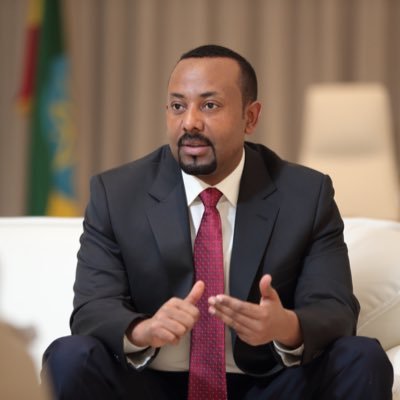
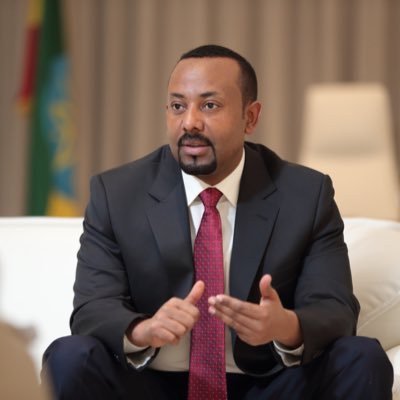
prime minister abiy Ahmed’s early morning messages
Our journey to prosperity goes beyond achieving meaningful change for our country and striving to produce competent leaders. Those who look at the distance like an eagle, Those who reach their goal without deviating from their original purpose; Diligent leaders who work hard to make their mark will have a brighter future. Citizens who value the whole world and seek solutions above all else are valuable national resources. They are the engineers of Ethiopia’s future who will overcome the obstacles and obstacles, fall and rise and achieve victory. With them, our country will reach an irreversible peak. 3/3k
Our journey to prosperity goes beyond achieving meaningful change for our country and striving to produce competent leaders.
Those who look at the distance like an eagle, Those who reach their goal without deviating from their original purpose; Diligent leaders who work hard to make their mark will have a brighter future. Citizens who value the whole world and seek solutions above all else are valuable national resources. They are the engineers of Ethiopia’s future who will overcome the obstacles and obstacles, fall and rise and achieve victory. With them, our country will reach an irreversible peak.
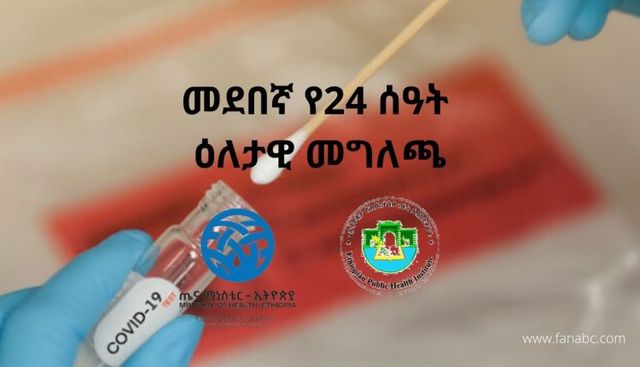
In the last 24 hours, an additional 1,186 people have been infected with corona virus and 20 have died Addis Ababa: August 27, 2020(FBC) Health Minister Dr. Lia Tadesse said 1,186 people have been diagnosed with corona virus in Ethiopia in the past 24 hours. She said 20 people had died in the past 24 hours, adding that the death toll had risen to 745. In the last 24 hours, 518 people have recovered and 16,819 have recovered from the virus. Currently, 330 people are being treated in the intensive care unit. So far, 831,470 people have been tested in Ethiopia and 46,407 people have been diagnosed with the virus. Of these, 16,819 are recovering and 28,831 are undergoing medical treatment.





 H.W TIKUS MEREJA BY HILINA.S